Your concern
Jaw Joint Disorders
When your jaw hurts, clicks, or locks, you feel it throughout your daily life. We find a gentle path back to ease in the jaw.
- Charlottenlund
- Jægersborg Allé 45
- Since 1998
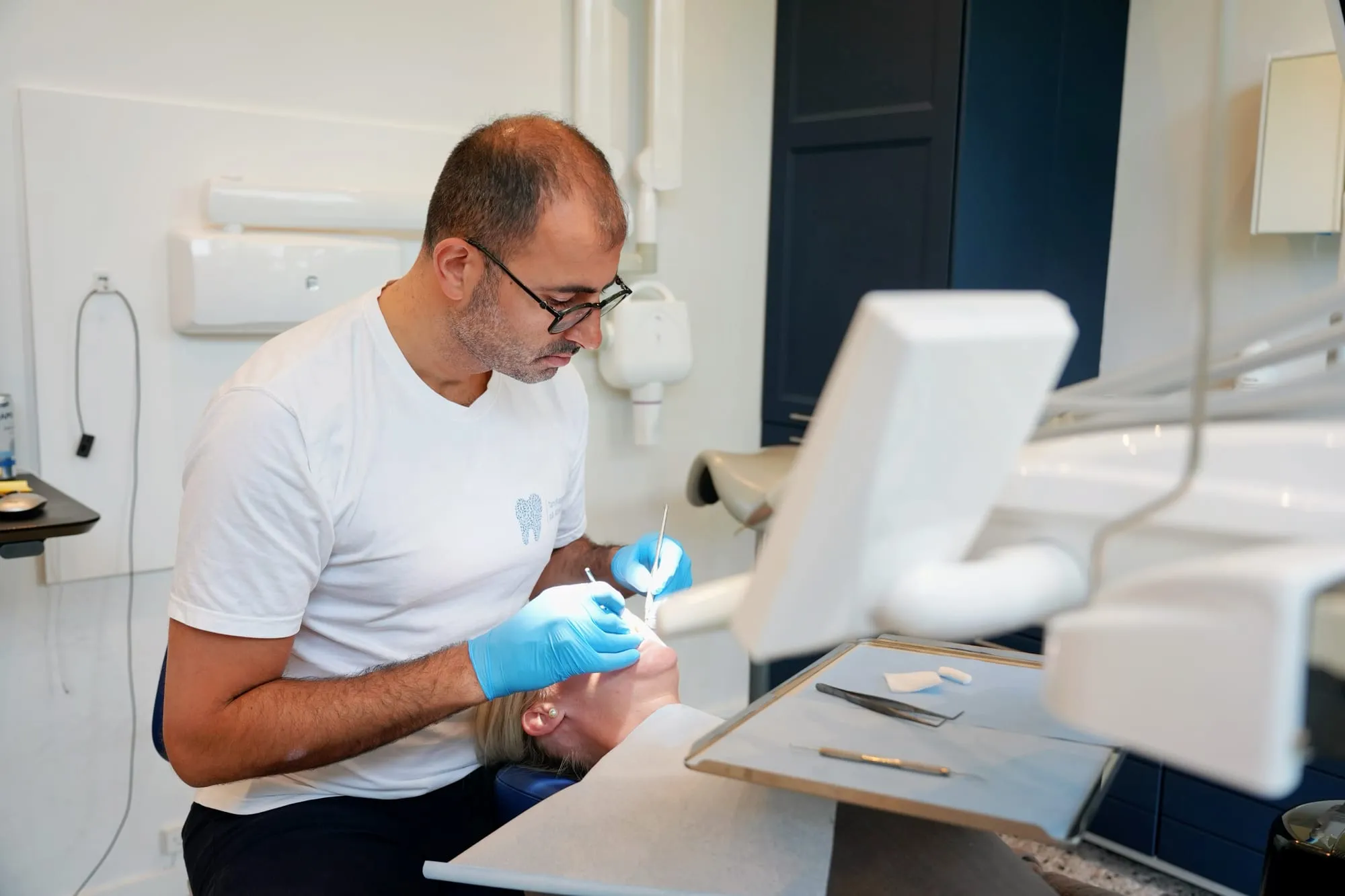
A large proportion of us experience symptoms from the jaw joint at some point — tenderness, sounds, or stiffness when we yawn. The condition is often referred to as TMD and involves the jaw joint and the chewing muscles. It sounds more serious than it usually is.
What you may notice
- Tenderness in the chewing muscles and jaw joint
- Clicking or popping when you open and close your mouth
- Pain when chewing or yawning
- A feeling that the jaw is stuck or opens unevenly
A healthy jaw joint can normally open 40 to 60 millimetres, depending on age and build. If your opening suddenly feels restricted, it is worth having it looked at.
How we help
Our guiding principle is to begin as gently as possible. For most people, simple jaw exercises, rest, and a little patience go a long way — the jaw often settles on its own when given support and time. If the symptoms are linked to teeth grinding, we will also consider a bite splint. Only if nothing else helps do we discuss more interventional options.
Questions & answers
FAQ
What does it mean when my jaw clicks?
Clicking or popping often comes from the joint disc in the jaw joint shifting slightly. This is common and rarely serious, but if it causes pain or locking, we are happy to take a look.
Does it need surgery?
Almost never. We always start with the most gentle treatment — exercises and rest are enough for most people. Surgery is only considered in very rare cases.
See also
Related reading.

Book appointment
Ready for a smile you're proud of?
Book an appointment — or call us and we'll find a solution that works for you.
- Jægersborg Allé 45 · 2920 Charlottenlund
- Mon–Wed 08.00 – 16.30