
Treatment
Bone Grafting
When the jawbone has receded, we can rebuild it and create enough foundation for an implant.
- Charlottenlund
- Jægersborg Allé 45
- Since 1998
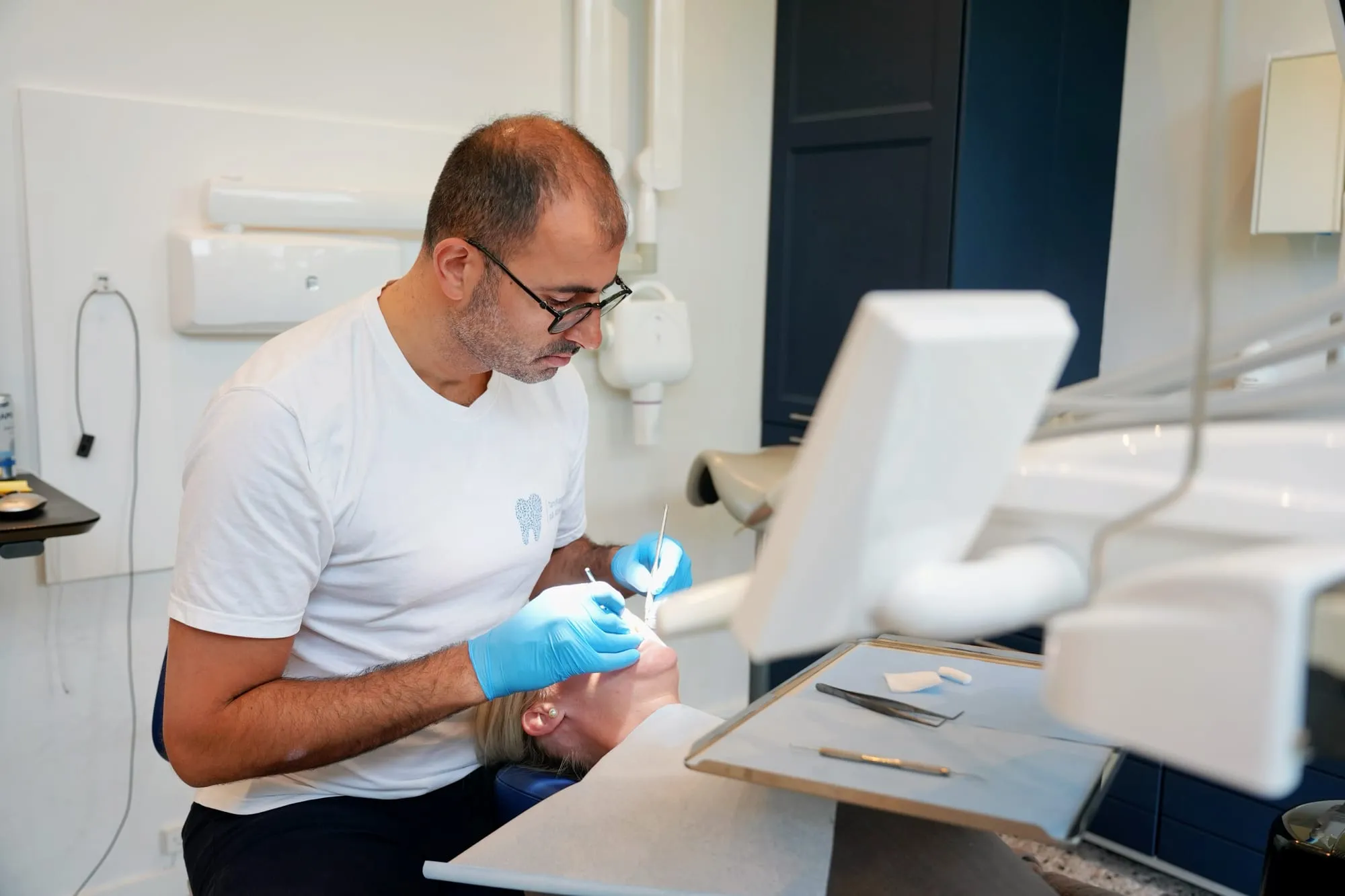
An implant needs a solid foundation of bone to anchor into. When a tooth has been missing for some time, the jawbone begins to recede — within just a year of an extraction, the width of the jawbone can be reduced by half. If there is not enough bone, we rebuild it before placing the implant.
Ways to rebuild bone
- Sinus lift is used in the upper jaw at the back and creates space for new bone where there is insufficient height for an implant.
- Bone grafting moves bone from another area of your own jaw — particularly useful at the front of the mouth, where aesthetics matter most.
- Socket preservation at the time of extraction, where we fill the tooth socket so the bone does not have a chance to recede.
Taking it at the right pace
Bone grafting is careful, considered work where patience pays off. The new bone needs time to grow and consolidate before we move forward. We plan the process together, so each step gets the time it requires — and the foundation turns out exactly as it should.
Questions & answers
FAQ
Why has the bone receded?
When a tooth is removed, the jaw loses the stimulation that kept the bone healthy, and it begins to shrink. Within as little as a year, the width of the jawbone can be noticeably reduced.
Does it take a long time?
The rebuilt bone needs time to heal and integrate before we place an implant. How long this takes depends on the extent of the procedure — we will walk you through this during the planning stage.

Book appointment
Ready for a smile you're proud of?
Book an appointment — or call us and we'll find a solution that works for you.
- Jægersborg Allé 45 · 2920 Charlottenlund
- Mon–Wed 08.00 – 16.30