
Your problem
Cavities
Almost everyone gets a cavity at some point. The earlier we find it, the simpler and more gentle the treatment will be.
- Charlottenlund
- Jægersborg Allé 45
- Since 1998
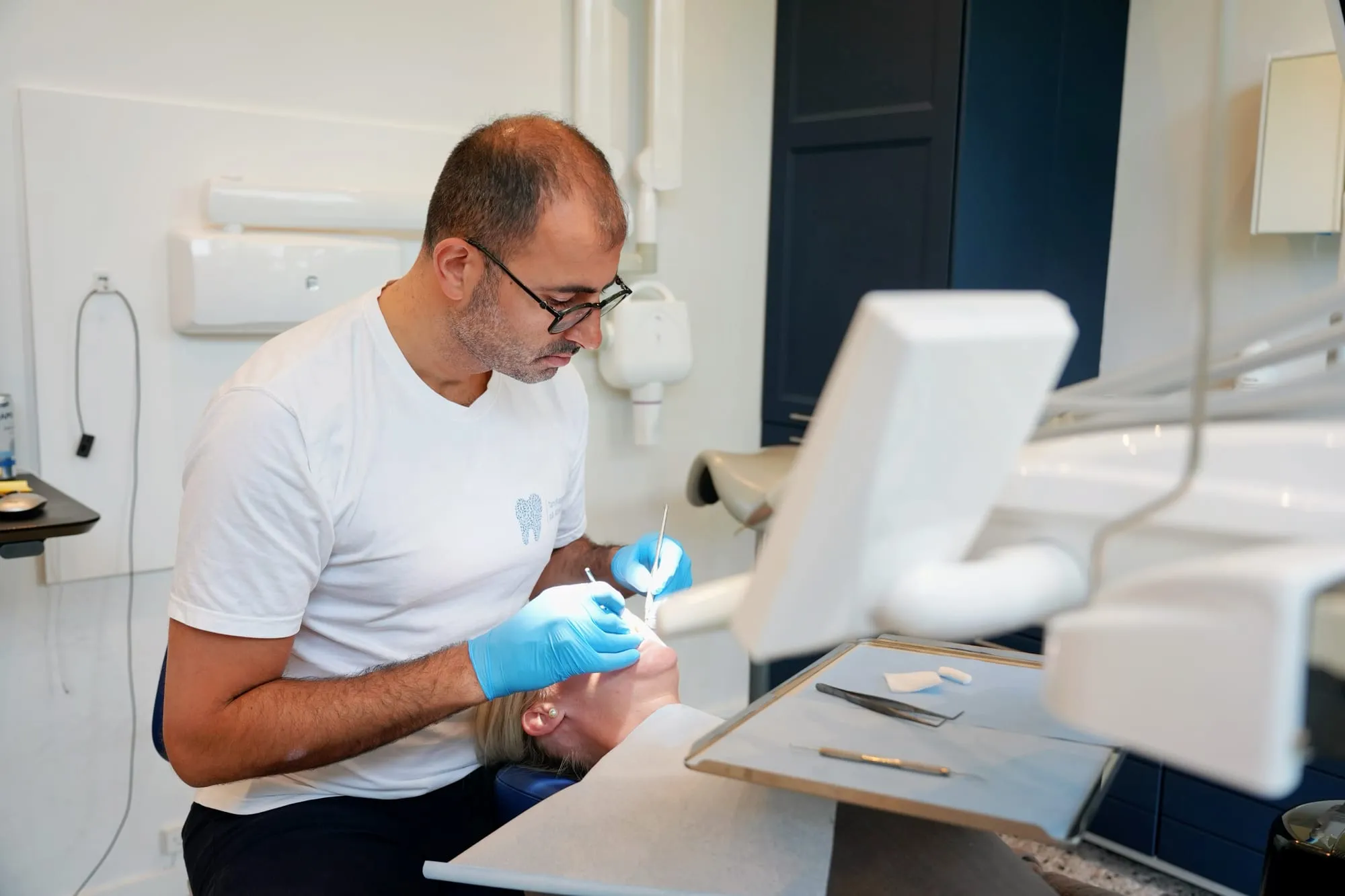
A cavity forms when bacteria in the mouth’s plaque convert sugar into acid, which slowly dissolves the tooth’s surface. This happens to most people at some point in their lives, and it is nothing to blame yourself for. The important thing is to find the cavity early, while the solution is still straightforward.
How it develops
A cavity grows inward in stages, and treatment follows accordingly:
- Superficial. At this stage we can sometimes simply monitor it and strengthen the tooth with good daily care.
- Moderate. Now we place a filling, which seals the cavity and rebuilds the tooth.
- Deep. When the cavity approaches the nerve, the tooth may need root canal treatment before we fill it.
How we help
During an examination, often with an X-ray, we locate cavities — including those you cannot feel. We then put together a calm, considered plan that stops the decay and preserves as much of your natural tooth as possible. If you are already experiencing toothache, you are always welcome to call before 9.00 am and receive an emergency appointment the same day.
Questions & answers
FAQ
Does a cavity always hurt?
Not at first. A small cavity is often completely unnoticeable. Only when it progresses deeper may you experience sensitivity to cold or sweet foods — and when it reaches the nerve, actual toothache. That is why we look for cavities during your check-ups, before they get that far.
Do all cavities need to be drilled?
No. A very superficial cavity can sometimes simply be monitored and halted with good oral hygiene. When the cavity is deeper, we place a filling, and only the rarest, most advanced cavities require root canal treatment.

Book appointment
Ready for a smile you're proud of?
Book an appointment — or call us and we'll find a solution that works for you.
- Jægersborg Allé 45 · 2920 Charlottenlund
- Mon–Wed 08.00 – 16.30